
Shaw, Hull and Navarrette, CPA's
Check back weekly for the latest updates
Don’t have a tax-favored retirement plan? Set one up now
If your business doesn’t already have a retirement plan, it might be a good time to take the plunge. Current retirement plan rules allow for significant tax-deductible contributions. For example, if you’re self-employed and set up a SEP-IRA, you can contribute up to...
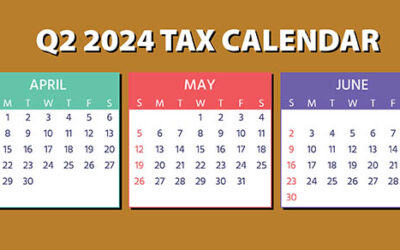
2024 Q2 tax calendar: Key deadlines for businesses and employers
Here are some of the key tax-related deadlines that apply to businesses and other employers during the second quarter of 2024. Keep in mind that this list isn’t all-inclusive, so there may be additional deadlines that apply to you. Contact us to ensure you’re meeting...

Coordinating Sec. 179 tax deductions with bonus depreciation
Your business should generally maximize current year depreciation write-offs for newly acquired assets. Two federal tax breaks can be a big help in achieving this goal: first-year Section 179 depreciation deductions and first-year bonus depreciation deductions. These...

Better tax break when applying the research credit against payroll taxes
The credit for increasing research activities, often referred to as the research and development (R&D) credit, is a valuable tax break available to certain eligible small businesses. Claiming the credit involves complex calculations, which we’ll take care of for...

Bartering is a taxable transaction even if no cash is exchanged
If your small business is strapped for cash (or likes to save money), you may find it beneficial to barter or trade for goods and services. Bartering isn’t new — it’s the oldest form of trade — but the internet has made it easier to engage in with other businesses....

Maximize the QBI deduction before it’s gone
The qualified business income (QBI) deduction is available to eligible businesses through 2025. After that, it’s scheduled to disappear. So if you’re eligible, you want to make the most of the deduction while it’s still on the books because it can potentially be a big...

Taking your spouse on a business trip? Can you write off the costs?
A recent report shows that post-pandemic global business travel is going strong. The market reached $665.3 billion in 2022 and is estimated to hit $928.4 billion by 2030, according to a report from Research and Markets. If you own your own company and travel for...

What’s the best accounting method route for business tax purposes?
Businesses basically have two accounting methods to figure their taxable income: cash and accrual. Many businesses have a choice of which method to use for tax purposes. The cash method often provides significant tax benefits for eligible businesses, though some may...

9 tax considerations if you’re starting a business as a sole proprietor
When launching a small business, many entrepreneurs start out as sole proprietors. If you’re launching a venture as a sole proprietorship, you need to understand the tax issues involved. Here are nine considerations: You may qualify for the pass-through deduction. To...

Update on IRS efforts to combat questionable Employee Retention Tax Credit claims
The Employee Retention Tax Credit (ERTC) was introduced back when COVID-19 temporarily closed many businesses. The credit provided cash that helped enable struggling businesses to retain employees. Even though the ERTC expired for most employers at the end of the...

Should your business offer the new emergency savings accounts to employees?
As part of the SECURE 2.0 law, there’s a new benefit option for employees facing emergencies. It’s called a pension-linked emergency savings account (PLESA) and the provision authorizing it became effective for plan years beginning January 1, 2024. The IRS recently...

Does your business have employees who get tips? You may qualify for a tax credit
If you’re an employer with a business where tipping is routine when providing food and beverages, you may qualify for a federal tax credit involving the Social Security and Medicare (FICA) taxes that you pay on your employees’ tip income. Credit fundamentals The FICA...

The standard business mileage rate will be going up slightly in 2024
The optional standard mileage rate used to calculate the deductible cost of operating an automobile for business will be going up by 1.5 cents per mile in 2024. The IRS recently announced that the cents-per-mile rate for the business use of a car, van, pickup or panel...
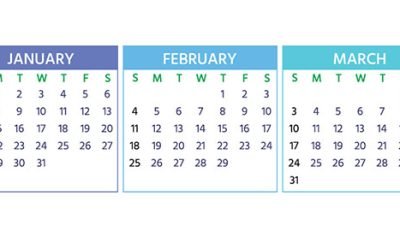
2024 Q1 tax calendar: Key deadlines for businesses and other employers
Here are some of the key tax-related deadlines affecting businesses and other employers during the first quarter of 2024. Keep in mind that this list isn’t all-inclusive, so there may be additional deadlines that apply to you. If you have questions about filing...

There still may be time to reduce your small business 2023 tax bill
In the midst of holiday parties and shopping for gifts, don’t forget to consider steps to cut the 2023 tax liability for your business. You still have time to take advantage of a few opportunities. Time deductions and income If your business operates on a cash basis,...

Key 2024 inflation-adjusted tax parameters for small businesses and their owners
The IRS recently announced various inflation-adjusted federal income tax amounts. Here’s a rundown of the amounts that are most likely to affect small businesses and their owners. Rates and brackets If you run your business as a sole proprietorship or pass-through...

A cost segregation study may cut taxes and boost cash flow
Is your business depreciating over 30 years the entire cost of constructing the building that houses your enterprise? If so, you should consider a cost segregation study. It may allow you to accelerate depreciation deductions on certain items, thereby reducing taxes...

New per diem business travel rates kicked in on October 1
Are employees at your business traveling and frustrated about documenting expenses? Or perhaps you’re annoyed at the time and energy that goes into reviewing business travel expenses. There may be a way to simplify the reimbursement of these expenses. In Notice...
Countdown to Tax Day!
Day(s)
:
Hour(s)
:
Minute(s)
:
Second(s)
Links to external sites are provided as a courtesy. They are not endorsed and their accuracy has not been verified by our firm or staff.